

A safer home can protect your independence when numb feet, muscle weakness, or balance changes make an ordinary step less predictable. This neuropathy fall prevention guide focuses on practical changes you can make room by room, starting with the places you walk most often and the hazards most likely to catch you off guard.
Explore the Neuro-Blast nerve health support system and keep moving with confidence.
Why neuropathy fall prevention starts at home
Effective fall prevention combines a safer environment with a personal plan. Clear walking paths, brighter lighting, stable support surfaces, appropriate footwear, and a healthcare review can reduce avoidable hazards while helping you understand the specific factors affecting your balance.
Peripheral neuropathy can change several systems used for steady movement. Reduced sensation may make it harder to notice a raised rug edge, a wet floor, or how firmly a foot has landed. Weakness may affect toe clearance or the ability to recover after a small stumble. Pain can also alter your gait because you may shift weight away from a sensitive area.
These changes do not mean a fall is inevitable. They do mean that relying on caution alone is not enough. The most useful approach is to remove hazards before you meet them and discuss new symptoms, near-falls, or balance changes with a healthcare professional.
10 room-by-room steps for a safer home
Start where risk and daily exposure overlap. Walk through your usual route from the bed to the bathroom, kitchen, living area, and front door. Look for anything that narrows the path, changes the floor level, reduces visibility, or requires you to reach for unstable furniture.
1. Brighten hallways, entries, and nighttime routes
Good lighting helps you spot obstacles before your foot reaches them. Replace burned-out bulbs promptly and use bright, even lighting at entrances, stairs, and transitions between rooms. Reduce glare where possible because a highly reflective floor can make edges and depth changes harder to judge.
Place motion-activated night-lights along the route from the bed to the bathroom. Keep a lamp or light switch within reach of the bed so you never need to cross a dark room. If a switch is difficult to reach, ask an electrician about a safer location rather than using an extension cord across a walkway.
2. Clear floors and secure cords
Remove loose papers, shoes, pet toys, and low decorative items from walking paths. Move electrical cords against walls and secure them without creating a raised edge. Arrange furniture so there is a wide, direct path through each room, including enough space for a cane or walker if you use one.
Make a habit of resetting the path at the end of the day. A predictable layout matters when reduced sensation or low light makes last-minute obstacle avoidance difficult.
3. Remove loose rugs and repair uneven flooring
Loose rugs can slide, bunch, or catch a toe. The safest option is often to remove them. If a rug must remain, use a full-length non-slip backing and check the edges regularly. Replace curled mats and repair loose boards, cracked tiles, and raised thresholds.
| Floor hazard | Safer response |
|---|---|
| Loose throw rug | Remove it or secure it with full non-slip backing |
| Raised threshold | Repair or mark it with high-contrast tape |
| Wet bathroom floor | Dry it promptly and use a secured non-slip surface |
| Cluttered walkway | Create a wide, direct, consistently clear path |
4. Make stairs easier to see and use
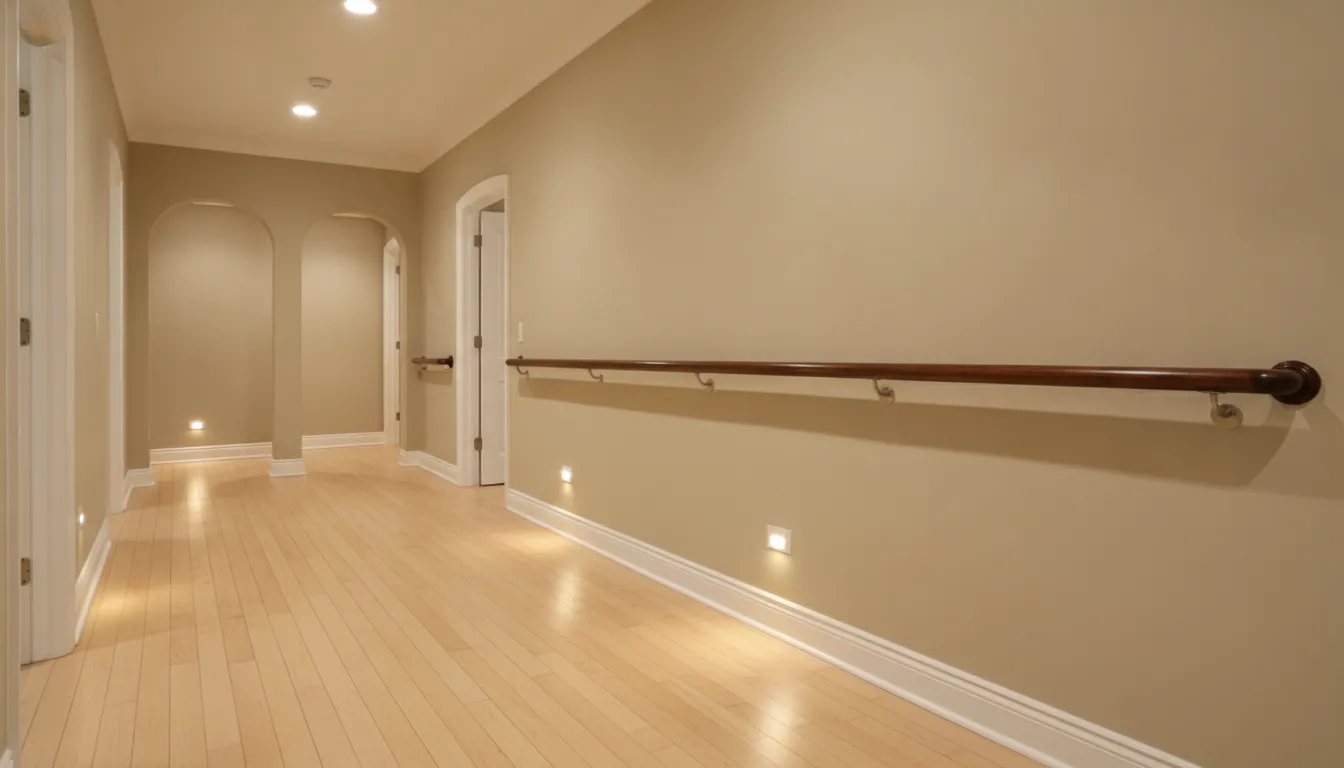
Install secure handrails on both sides of every staircase when possible. Rails should continue for the full flight and be easy to grip. Add high-contrast strips to the front edge of steps so each tread is easier to distinguish, especially when the floor and stairs are similar colors.
Keep stairs completely free of stored items. Ensure the top and bottom landings are well lit, and use switches at both ends. Do not carry loads that block your view or prevent you from holding a rail. If stairs have become difficult, ask a healthcare professional or occupational therapist about safer options.
5. Add stable support in the bathroom
Bathrooms combine hard surfaces, water, tight spaces, and frequent position changes. Install properly anchored grab bars beside the toilet and inside the shower or tub. Towel bars are not designed to support body weight. Use a non-slip shower surface and consider a shower chair or handheld showerhead if standing is tiring or unsteady.
Dry water promptly and keep frequently used items within easy reach. Avoid reaching overhead or twisting while standing on a wet surface. A raised toilet seat may help if leg weakness makes sitting or standing difficult, but it should be selected and installed with professional guidance.
6. Organize the kitchen to limit reaching
Store everyday dishes, cookware, and food between waist and shoulder height. This reduces the need to climb, bend deeply, or reach while off balance. Clean spills immediately, keep cabinet doors closed, and use a stable counter for support when changing direction.
Never stand on a chair. If an item cannot be reached safely, ask for help or use an appropriate reaching tool while seated or otherwise stable. Keep a clear route between the refrigerator, sink, stove, and dining area.
7. Create a safer bedroom routine
Keep the route from the bed to the door and bathroom clear. Position a stable lamp, phone, glasses, and any prescribed mobility aid within reach. Sit at the edge of the bed for a moment before standing, especially if you sometimes feel lightheaded after changing position.
Choose a bed height that allows both feet to rest securely on the floor when seated. Avoid loose bedding that drapes into the walkway. If you wake frequently at night, review the reason with a healthcare professional rather than simply trying to move faster in the dark.
8. Choose supportive footwear indoors and outdoors
Wear well-fitting shoes with a closed heel, secure fastening, and non-slip sole. Shoes should not pinch, rub, or create pressure points you may not immediately feel. Avoid walking in socks alone on smooth floors, and replace footwear when the tread becomes worn or uneven.
Inspect your feet regularly for redness, swelling, blisters, or skin changes. A clinician or podiatrist can help with footwear selection and foot-care needs. Dr. Sharone Stern's podiatric perspective also informs Neuro-Blast's focus on supporting healthy nerve function and mobility as part of a broader wellness routine.
9. Use mobility aids that fit you correctly
A cane or walker can improve stability only when it is the right type, adjusted to the correct height, and used properly. Borrowed or poorly fitted equipment may create new hazards. Ask a physical therapist or other qualified professional to assess your walking pattern and teach you how to use the device on flat floors, stairs, and curbs.
Check rubber tips, wheels, brakes, and fasteners regularly. Keep the aid within reach instead of leaving it across the room. Do not use furniture, rolling chairs, or towel bars as substitutes for a properly selected support.
10. Plan for entrances, porches, and outdoor paths
Repair cracked pavement, uneven steps, and loose railings. Keep porches and paths clear of leaves, hoses, packages, and other obstacles. Use bright entry lighting and add non-slip treatment where surfaces become wet. During poor weather, ask for help or choose a safer route rather than rushing.
Place commonly used items, such as keys, where you can reach them without balancing bags or turning abruptly at the door. A small bench near the entrance can provide a stable place to sit while changing footwear.
What should be on a neuropathy fall prevention checklist?
A useful checklist covers visibility, footing, support, personal symptoms, and emergency readiness. Review it after a near-fall, a change in symptoms, a medication adjustment, or a change in the home. A trusted family member can help identify hazards that have become easy to overlook.
- Walking routes are wide, direct, and free of clutter.
- Loose rugs are removed or secured with full non-slip backing.
- Hallways, stairs, entrances, and nighttime routes are well lit.
- Stairs have secure rails and visible step edges.
- Bathrooms have anchored grab bars and non-slip surfaces.
- Frequently used kitchen items are easy to reach.
- Supportive, well-fitting shoes are worn indoors and outdoors.
- Mobility aids are professionally fitted and maintained.
- A phone or alert device is easy to reach.
- Near-falls and symptom changes are discussed with a healthcare professional.
Print or save this list, then review one room each week. Small corrections are easier to maintain than a one-time overhaul.
See how Neuro-Blast supports healthy nerve function, cellular energy production, and mobility.
When should you discuss fall risk with a professional?
Talk with a healthcare professional after any fall, repeated near-falls, new numbness, new weakness, dizziness, or a noticeable change in walking. Seek urgent medical care for sudden weakness, facial drooping, trouble speaking, severe headache, chest pain, fainting, or a significant injury.
A fall-risk review may include vision, hearing, foot health, strength, gait, blood pressure, and medication effects. Do not stop or change medication on your own. Bring a complete medication and supplement list to the appointment, and mention when symptoms occur and what you were doing at the time.
A physical therapist can evaluate strength and walking mechanics. An occupational therapist can assess your home and recommend changes based on how you complete daily tasks. Your clinician can also help determine whether an assistive device or another evaluation is appropriate. The CDC STEADI program provides evidence-based fall-prevention resources for older adults and healthcare teams.
How Neuro-Blast fits into a broader mobility routine
No supplement replaces home safety changes or medical care. Neuro-Blast is a doctor-created, AI-enhanced nerve health support system designed to support healthy nerve function, cellular energy production, circulation, normal nerve signaling, joint comfort, and mobility.
The complete system combines daily vegetarian capsules for ongoing support with an oral spray for on-the-go support. It can be one part of a broader routine that also includes appropriate medical care, safe movement, supportive footwear, and a home environment designed around your needs. Learn more about the Neuro-Blast approach to nerve health or review answers to common product questions on the Neuro-Blast FAQ page.
These statements have not been evaluated by the Food and Drug Administration. This product is not intended to diagnose, treat, cure or prevent any disease.
Frequently asked questions
Can neuropathy increase fall risk?
Neuropathy may affect sensation, strength, balance, or gait, which can make some hazards harder to detect or recover from. Your individual risk depends on your symptoms, health, medications, vision, environment, and other factors. Discuss concerns or near-falls with a healthcare professional.
What is the first home change to make?
Start by clearing and lighting the route you use most often, especially the path between the bed and bathroom. Then remove loose rugs, secure rails, and review bathrooms and stairs, where a slip or missed step can have serious consequences.
Should I use a cane or walker?
A cane or walker may improve stability for some people, but it should be selected, fitted, and taught by a qualified professional. The wrong device or height can interfere with your gait and create an additional hazard.
How often should I review my home?
Review your home after any fall or near-fall, when symptoms or medications change, and at least seasonally. Outdoor paths, lighting, rugs, footwear, and mobility-aid parts can change over time.
Get moving again with a safer plan
Fall prevention is not about giving up independence. It is about designing your routines and surroundings so each step is more predictable. Begin with one route today, then ask your healthcare team which personal risk factors deserve attention.
Get moving, again: explore the complete Neuro-Blast nerve health support system.
