

If you've typed “what does neuropathy feel like” into a search bar, you've probably noticed something odd in your feet or hands that's hard to describe. Maybe your toes burn at night, your soles feel padded, or a light touch stings. These sensations are real, they have names, and the words you use for them can help a clinician find the cause.
Peripheral neuropathy means damage to the nerves outside the brain and spinal cord. The National Institute of Neurological Disorders and Stroke (NINDS) counts more than 100 types, so descriptions vary. For a full checklist and next steps, see our neuropathy symptoms and patterns guide.
What does neuropathy feel like? Most often it feels like tingling, pins and needles, burning, or sudden electric-shock pain that starts in the toes or fingers and affects both sides. Many people say their feet feel numb or wrapped in wool. Light touch may hurt, symptoms are often worse at night, and some people feel little or no pain at all.
Why neuropathy can feel numb and painful at the same time
Feet that feel numb and also hurt can seem contradictory. Damaged nerves can go wrong in three ways: signals that should be sent aren't, signals get sent when they shouldn't be, and messages get garbled on the way.
Think of a damaged phone line. Some calls never go through (numbness). Others ring with nobody there (tingling or burning with no trigger). And some arrive distorted (a soft touch that registers as pain). All three can happen in the same foot.
What neuropathy pain feels like, sensation by sensation
Paresthesia means tingling or pins and needles. Dysesthesia means an unpleasant, abnormal sensation, such as burning. See also neuropathy versus neuropathic pain.
Burning
Burning is one of the most common descriptions. The Cleveland Clinic lists pain that feels like burning, tingling, stabbing or an electric shock. In a 2026 review of 10 qualitative studies covering 351 people with diabetic neuropathy, participants compared the feeling to touching a stove or walking on needles.
Electric shocks, stabbing or shooting pain
These are brief, sharp jolts that can arrive out of nowhere. The Foundation for Peripheral Neuropathy lists sharp, jabbing, shooting or electric-like pain, along with throbbing. Pain receptors can fire on their own, with no trigger.
Pins and needles, prickling or buzzing
It's like a foot waking up after it "fell asleep," except it doesn't pass. Some people say it buzzes or feels like a faint vibration. It often shows up first: MedlinePlus notes that tingling or burning in the arms or legs may be an early sign. See our guide to tingling in the feet and hands.
Numb, or like your feet are wrapped in wool
The American Diabetes Association (ADA) says patients frequently describe feet that feel "wrapped in wool" or like walking on thick socks. Numbness can also make it harder to tell where your feet are as you move. A pebble-like feeling in one spot under the ball of the foot can have a different cause, so note where it is.
Feeling cold when your feet aren't cold
Some people describe freezing pain even though their feet aren't cold. Others lose the ability to sense temperature changes, so test bath water with your elbow or a thermometer before stepping in. A foot that is actually cold, pale or bluish often points to a blood flow problem instead. See signs of poor circulation in the legs.
When bedsheets hurt: allodynia
Allodynia is pain from a touch that shouldn't hurt, such as bedsheets resting on your feet. The Cleveland Clinic describes three kinds: pain from clothing moving over skin, from gentle pressure like a handshake, and from a mild temperature change.
Beyond sensation: motor and autonomic neuropathy
Most neuropathies affect sensory, motor and autonomic nerves to some degree. The last two produce symptoms people don't always connect to nerves.
Motor nerves: weakness, cramps and foot drop
- Muscle weakness, painful cramps and visible twitching under the skin
- Trouble lifting the front of your foot, called foot drop, so your toes catch or you trip
- Legs that buckle, or difficulty with buttons
Weakness and numbness both affect balance, so review fall prevention at home.
Autonomic nerves: dizziness, sweating and digestion
Autonomic nerves run automatic functions. When they're affected, the NHS lists feeling faint or dizzy when you stand up, a rapid heartbeat, too much or too little sweating, bloating, constipation or diarrhea, particularly at night, and bladder or sexual problems. NINDS adds heat intolerance. Sudden loss of bladder or bowel control is an emergency (see the table below).
Where you feel it: the stocking-glove pattern
Most neuropathies are "length-dependent." The longest nerves, which reach the feet, show symptoms first or worst. Over time the area can creep upward like a stocking, and similar symptoms may later appear in the hands like a glove.
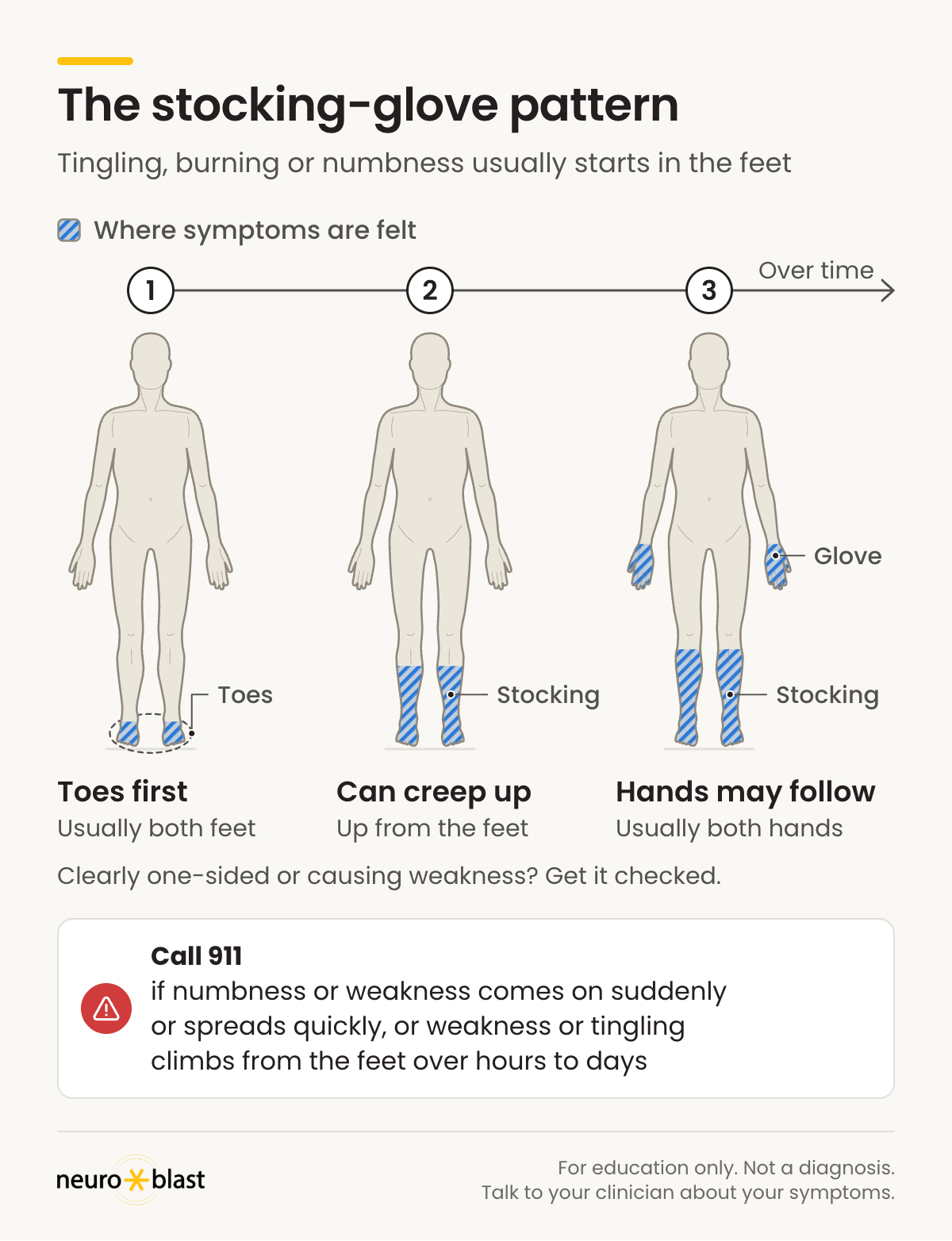
What does neuropathy in the feet feel like?
It usually starts in the toes of both feet: tingling, burning, or a padded, numb feeling on the soles. Balance can slip, especially with your eyes closed, because your sense of foot position is affected.
What does neuropathy feel like in the hands?
In length-dependent neuropathy, hand symptoms typically appear after the feet are already affected. You might drop things, fumble buttons, or feel fingertips tingle. Tingling or numbness mainly in the fingers of one hand, with normal feet, can be carpal tunnel syndrome, a single pinched nerve at the wrist. Learn more about nerve pain in the hands.
How it tends to spread
Symptoms may develop over days, weeks or years. In diabetic neuropathy, the stocking-glove pattern is present in about 80% of patients and can take several years to develop. One side can feel a little worse, but clearly one-sided symptoms or marked weakness are atypical and should be checked by a clinician. Numbness that comes on suddenly or spreads quickly needs emergency care (see below).
Why neuropathy often feels worse at night
In a 2006 study of people with painful diabetic neuropathy or nerve pain after shingles, pain rose steadily through the day. A 2013 follow-up found pain was 33% higher at 8 PM than at 8 AM. The pattern held even during medication.
These studies measured the pattern without proving why it happens, and bedsheets touching sensitive skin can add to it. Evening pain that climbs doesn't automatically mean your nerves are getting worse. For practical ideas, see sleeping with neuropathy.
Does neuropathy come and go?
Yes, it can. Houston Methodist neurologists say symptoms can come and go or change in severity, and the Foundation for Peripheral Neuropathy describes pain as constant or periodic.
Flares can follow triggers such as poorly controlled blood sugar, alcohol, low B12, too little or too much B6, and infections. See what triggers neuropathy in the feet. Symptoms that come and go still deserve an evaluation.
How neuropathy can feel different depending on the cause
Diabetes is the leading cause in the U.S., but thyroid disease, autoimmune disease, infections, alcohol and certain medicines can also cause it.
What does diabetic neuropathy feel like?
Diabetic neuropathy usually feels like burning, tingling or shooting pain in the toes and feet on both sides, or a numb, "wrapped in wool" feeling on the soles. Pain may be the first symptom. But up to 50% of diabetic neuropathy may cause no symptoms at all, and numb feet can hide sores you don't notice. See our diabetic neuropathy overview.
Chemotherapy-induced neuropathy
Chemotherapy can cause numbness, tingling, burning or pins and needles in the hands and feet. Oxaliplatin can cause cold-triggered tingling in the mouth, throat, hands and feet within hours of an infusion, usually settling in 48 to 72 hours. Longer-term symptoms can keep worsening for weeks after treatment ends, a pattern called "coasting".
Low vitamin B12, or too much B6
B12 deficiency can cause numbness or tingling in the hands and feet and trouble walking. Higher-risk groups include people taking metformin or acid reducers, vegans who don't supplement, adults over 75, and people with past stomach or intestinal surgery. The ADA's 2026 standards suggest periodic B12 checks with long-term metformin, especially if neuropathy is present.
Too much vitamin B6 can also cause neuropathy. Most cases involve high-dose supplements, but a 2023 case report described a 73-year-old man who developed neuropathy and high B6 levels while taking only a daily multivitamin with 6 mg of B6.
What does neuropathy feel like to you? How to describe it to your doctor
Doctors ask about your symptoms, what triggers or eases them, alcohol use, work exposures and family history. Come ready to answer:
- Where exactly is it, and is it on both sides?
- When did it start, and did it come on over days, months or years?
- Which words fit (burning, electric, pins and needles, numb, cold, touch-sensitive), and is it worse at a certain time of day?
- Any weakness, tripping, falls, dizziness on standing, or foot sores?
- What medicines and supplements do you take, including metformin, chemotherapy and any B6?
A simple symptom diary
Log morning and evening entries for one to two weeks and bring them along.
| When | Where (left, right, both) | Words that fit (0-10) | Trigger, effects and what helped |
|---|---|---|---|
| Mon, 8 AM | Both big toes | Numb, "thick socks" (2) | Getting out of bed; unsteady on stairs; walking warmed up |
| Mon, 9 PM | Both soles | Burning, electric jolts (6) | Sheets touching feet; woke twice; feet uncovered |
| Tue, 7 PM | Right fingertips | Pins and needles (3) | Buttoning a shirt; dropped keys |
Tests you may be offered
A basic exam often includes a 10-gram monofilament touch test, a 128-Hz tuning fork for vibration, pinprick or temperature testing, and reflexes. Blood tests can detect diabetes, vitamin deficiencies, kidney or liver problems and infections. Nerve conduction studies and electromyography (EMG) measure how well nerves and muscles work, and a skin biopsy can check small nerve fibers.
Once a cause is found, our neuropathy treatment options guide explains what the next conversation may cover.
When to see a doctor
| How soon | Signs | Why it matters |
|---|---|---|
| Call 911 | Any of these starting suddenly: numbness or weakness of the face, arm or leg, especially on one side; a drooping face; confusion or trouble speaking; trouble seeing; loss of balance; severe headache | Possible stroke |
| Call 911 | Weakness or tingling that climbs from the feet over hours to days, or trouble breathing or swallowing | Possible Guillain-Barré syndrome |
| Call 911 | A foot that suddenly turns cold, pale or blue and is painful | Possible blocked artery, which can also cause numbness |
| Call 911 | Numbness or weakness that comes on suddenly or spreads quickly | Rapid onset needs emergency assessment |
| Go to the ER now | New trouble urinating or loss of bladder or bowel control, especially with numbness in the buttocks or inner thighs, leg weakness or back pain | Possible cauda equina syndrome, pressure on nerve roots at the base of the spine |
| Same day | A new sore, blister, cut, redness, warmth, swelling or drainage on a numb foot, especially with diabetes | Unfelt injuries can become infected; warmth and swelling can signal Charcot foot |
| Same day | New foot drop, legs buckling or a fall; fainting when you stand (call 911 instead if you're over 50, have diabetes, were injured, or have chest pain or an irregular heartbeat) | Motor or autonomic nerve involvement |
| Before next chemo dose | New or worsening numbness, tingling or weakness during cancer treatment | Your team may adjust treatment |
| Book a visit | Tingling, burning or numbness that lasts, keeps returning, disturbs sleep, or is clearly one-sided | Early treatment improves the chance of controlling symptoms |
Practical steps while you look for answers
- Check your feet daily for cuts or blisters you may not feel.
- Get a yearly foot sensation exam if you have diabetes, even without symptoms.
- Stand up slowly if you get dizzy on standing.
- Stay active with balance work such as tai chi or yoga, and wear supportive shoes with a wide toe box.
- Review every supplement with your clinician, including your total B6. If you've taken metformin for years, ask about B12 testing.
- Talk to your oncology team before any supplement during chemotherapy. In a randomized trial of women on taxane chemotherapy, acetyl-L-carnitine made neuropathy worse for two years, and ASCO guidelines discourage using it to prevent chemotherapy neuropathy.
- If you take diabetes medicine, check with your clinician before taking any supplement that contains alpha-lipoic acid, which can lower blood sugar.
Where Neuro-Blast fits
A supplement doesn't replace a diagnosis, treatment of the underlying cause, or the care your clinician prescribes, and it isn't a treatment for neuropathy. The Neuro-Blast System has two parts formulated to support healthy nerve function. The capsules contain PEA, alpha-lipoic acid, a B-complex blend, choline and inositol. The oral spray contains PEA, acetyl-L-carnitine, boswellia and a B-complex blend. A capsules-only option is listed separately as the Neuro-Blast capsules.
Each two-capsule serving contains 40 mg of vitamin B6; that figure is the capsule amount, and the oral spray carries its own separate label, so read it too. The 40 mg is below the U.S. adult upper limit of 100 mg a day but above the 10 mg a day from supplements the NHS advises without a doctor's recommendation, so ask your clinician before starting, count it with any other B6 you take, and stop and call your clinician if new numbness or tingling begins. The oral spray contains acetyl-L-carnitine, discussed above, so check with your oncology team before taking any supplement during cancer treatment; check with your prescriber if you take diabetes medicine.
These statements have not been evaluated by the Food and Drug Administration. This product is not intended to diagnose, treat, cure, or prevent any disease.
Frequently asked questions
What does early neuropathy feel like?
It usually starts as numbness, prickling, tingling or burning in the toes or fingers, according to the Foundation for Peripheral Neuropathy and MedlinePlus.
Can you have neuropathy without pain?
Yes. Up to 50% of diabetic neuropathy may cause no symptoms, according to the ADA. Painless numbness still raises the risk of unnoticed foot injuries, so regular foot exams matter.
Does neuropathy come and go, or is it constant?
It can be either. Symptoms often fluctuate with the time of day and with triggers such as poorly controlled blood sugar or alcohol. Intermittent symptoms still deserve a medical evaluation.
Is neuropathy always in both feet?
Usually. Most common types, including diabetic neuropathy, affect both feet fairly evenly. Symptoms that are clearly one-sided or cause weakness need a prompt medical evaluation. Numbness or weakness that comes on suddenly or spreads quickly is an emergency, so call 911.
What does neuropathy feel like in your hands?
Usually tingling, numbness or burning in the fingertips of both hands, plus clumsiness or dropping things. It typically starts after the feet are affected.
What can be mistaken for neuropathy?
Carpal tunnel syndrome can cause tingling mainly in one hand. A blocked artery can make a foot cold, pale and numb, and sudden one-sided numbness can signal a stroke. The location and pattern help a clinician tell them apart.
This article is for general education and is not a substitute for personalized medical advice. Talk with your healthcare provider about your symptoms and before starting any supplement.
